

Table of Contents
The Flashlight Rule
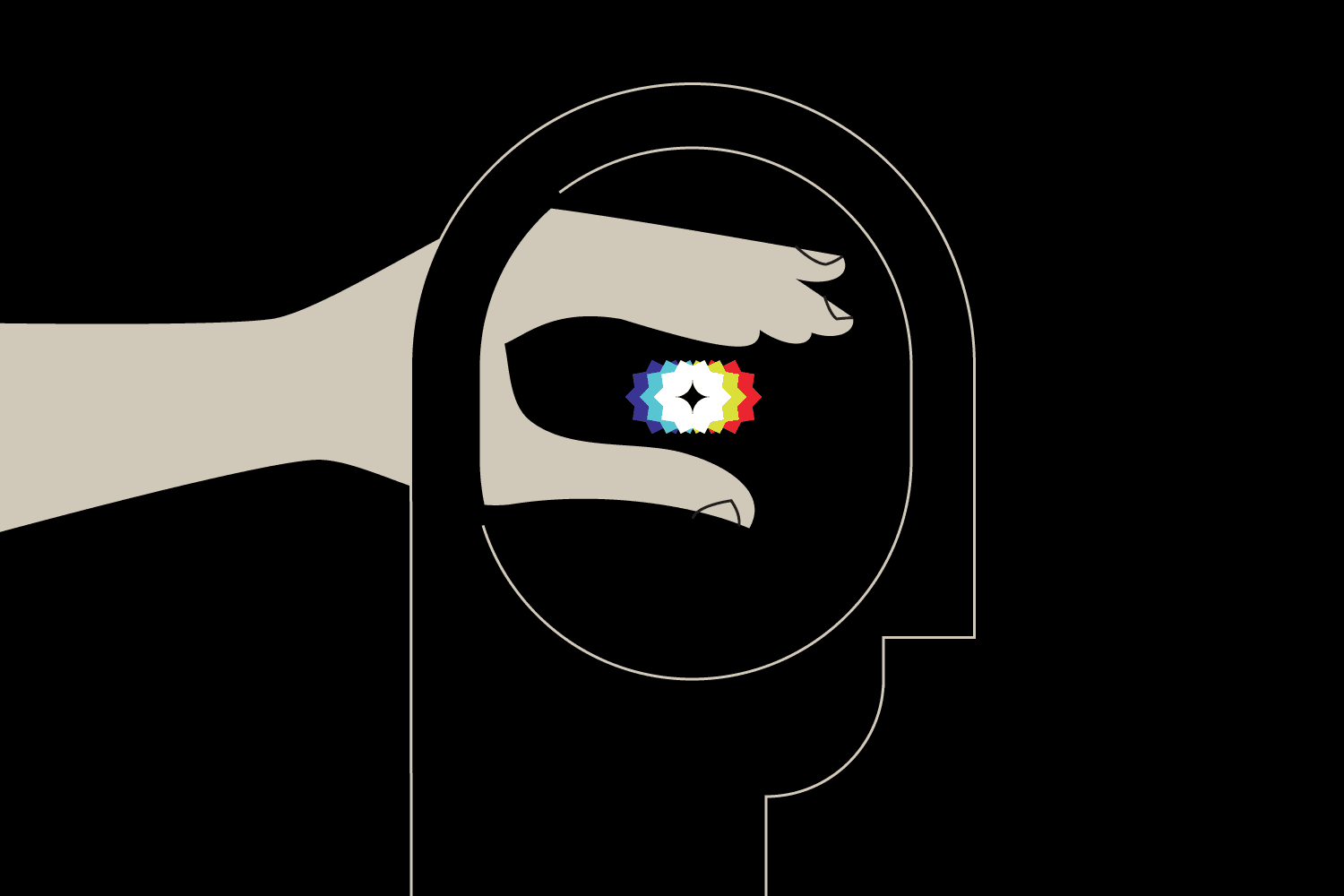
Think of your customer’s mind like a dark room, and their focus like a flashlight.
Whatever they point that flashlight at is the only thing that exists to them in that moment. Everything else is completely invisible.
Money is the exact same way. Money doesn't move until someone points their flashlight at you first.

If nobody is looking at your business, you don't exist. Period. You could have the best product in the city, but if their flashlight is pointed somewhere else, you’re broke.
So how do you get someone to move their flashlight and point it at you? Emotions.
Humans don't look at things because they are logical. They look at things because they feel something. Fear, excitement, frustration, or a good laugh.
Look at your phone right now. You don't stop scrolling for a boring company brochure. You stop because a video made you laugh, made you mad, or called out a problem you're dealing with today. Emotion is the hook.
How Big Brands Steal The Flashlight
Most small business owners try to buy attention with boring ads or beg for it with weak posts saying "buy my stuff."
That doesn't work. Big brands don't beg. They capture focus and redirect it.
Look at how the big players do it:
Nike rarely talks about rubber soles or shoe stitching. They talk about the pain of losing and the obsession with winning. They make you feel lazy for sitting on the couch, then hand you a pair of sneakers as the solution.
Apple doesn't list tech specs to normal people. They sell status. They make you feel like an insider if you have the new phone, and slightly left out if your text bubbles are green.
They find the headache inside your brain, poke it just enough so you feel it, and then show you how their product fixes it.
The 4-Step Game Plan for Small Businesses
You don't need millions of dollars to do this. You just need a simple, repeatable pipeline:
Ache → Content → Small Win → Owned Asset
If you miss any part of this chain, you're either making videos for free like an entertainer, or running an invisible business nobody buys from.
Here is how you execute it starting today:
Step 1: Audit the Surface Ache
Stop making content about your product features or telling people "what you do." Nobody cares.
Talk about what pisses your customer off on a Tuesday morning. What is the annoying, frustrating headache keeping them awake at night?
Find that exact ache. Make your next three posts about that specific pain.
Step 2: Give Them a Small Win First (The Entry Offer)
Before you ask someone to hand you $1,000, prove you can solve a small problem for free or cheap. You have to build trust first.
Give them a simple, low-risk offer that solves one tiny piece of their problem fast:
A Local Mechanic: Drops a free 1-page "5-Point Winter Prep Checklist" so your car doesn't die on the highway.
A Gym Owner: Offers a free 3-day "No-Equipment Workout Guide" for busy moms who can't leave the house.
An AI Consultant: Hands out a dead-simple 1-page prompt cheat sheet that saves a business owner two hours of typing a week.
When you hand someone a quick win, they stop seeing you as a salesman and start seeing you as the person who fixes their life. Selling them the big service later becomes effortless.
Step 3: Make Content That Targets the Ache
Run your content on pure emotion. You’ve got two main gears to use here:
Gear A: The Laugh (Virality). Make light of the struggle. Poke fun at common industry problems or relatable client headaches. When people laugh, they share it with their friends. That gets you wide reach.
Gear B: The Pain (Conversion). Point directly at the problem they are facing right now. Show them why they are stuck, reframe the issue, and hand them your product as the exit door.
Whatever you post, EMOTION is the main ingredient. If your post doesn't make them feel relieved, amused, or understood, they are going to swipe right past you.
Step 4: Turn Rented Eyes into Owned Assets
Social media is rented land. Mark Zuckerberg owns Instagram. ByteDance owns TikTok.
If Instagram decides to change its algorithm tomorrow—or randomly deletes your page—your business shouldn't die. You cannot build a castle on land you don't own.
Your main goal on social media is to get people OFF the app and ONTO a list you control (their email address or phone number).
Look at how the smartest creators run this:
Alex Hormozi: Gives away massive courses for free on social media, but to get the downloads, you drop your email address. If his YouTube channel vanished tomorrow, he still has millions of contacts in his database.
Dan Koe: Uses short 2-line tweets to grab attention, but uses them to drive thousands of people into his weekly email newsletter every single week.
A Local Coffee Shop: Offers a free pastry on your next visit if you scan a QR code at the register and join their VIP text club. Now they can text 1,000 local regulars on a slow rainy Tuesday and fill the shop instantly.
The Bottom Line
Stop treating social media like a digital billboard.
Use it to capture attention, trigger an emotion, fix a small problem, and collect the contact info of the people you're built to serve.
Fix the operator. Run the system. Own the focus.
Take your FREE Personality & Purpose Snapshot
A personalized breakdown of who you are, what gets in your way, and where you're built to go. It’s FREE and will be well worth it. Find out your career path and purpose.
No confusion. Just clarity.